
Advice From Those Who Are Grieving

How To Stop Time

Don't Let Your Wound Become Your Story

2 Exercises to Strengthen Your Relationship

In Praise of Boredom
Is Our Collective Mood Contagious

Karma: Is It True What Goes Around Comes Around?

You Aren't The Thought You're Thinking
Co-author with Sanjiv Chopra of “Your Life’s Purpose” column in Psychology Today
Read more

One Simple Daily Practice That Will Transform Your Health

Why Coffee May Be A Magic Elixir
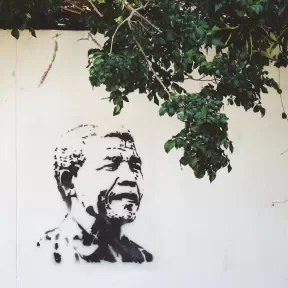
How To Forgive Like Nelson Mandella

5 Simple Ways To Spark Happiness During Uncertain Days
Books by Gina Vild
NOTE: Apology…the hyperlinks do not work as site is being updated. Please scroll for excerpts.)
Buoyant: The Art and Science of a Resilient Life
Preface excerpt
Learn to Manage Your Thoughts Excerpt
Chris Herren Story: The Greatest Comeback Off The Court
Sheshni Moodlier, MD Story: Grief as a Path to Healing
The Two Most Important Days: How Find Your Purpose and Live a Happier, Healthier Life
Excerpt
From BUOYANT
EXCERPT
PREFACE (partial)
“In the midst of winter, I found there was, within me, an invincible summer.” -Albert Camus
I don’t recall who chose to watch a film about the Enigma code that particular Saturday night. Was it my husband or me?
Ironic, I thought much later. The Imitation Game, a film about the British cracking the German code that masked so many powerful secrets and ultimately led to the liberation of Europe, was a metaphor for the revelations about to unfold in my life.
My husband sat at a distance, engrossed in the film, while I perched on the sofa, ignoring it. My eyes were focused on a pile of unopened envelopes that held eight years of bank statements.
I discovered the paper trail when I uncovered a private account on my husband’s computer. The account was buried beneath a layer of security that erased daily searches and routinely changed passwords. I was an inexperienced sleuth, but once I learned of the bank account, I surreptitiously ordered every obtainable statement. I feared they would open Pandora’s box, and I would learn things from which there would be no return.
For days, the envelopes remained unopened, taunting me.
I recall the moment my hand reached for the top statement but recoiled. I thought: Destroy them. Toss them unopened into the fireplace that is providing the only warmth in the room this evening. Preserve your perfect life and your idyllic twenty-eight-year marriage, let those envelopes keep their secrets. Save yourself from what is likely to spill forth and char your most treasured memories.
Over the previous six weeks, something long dormant stirred and then emerged as a formidable force that demanded I take a closer look at my life. It prodded me to begin pulling at threads. Each thread I tugged revealed something incongruous with the life I thought I was living. Each thread exposed events that teased me with the knowledge that things were far different from what I believed about my husband and our long, happy marriage. The more I unraveled, the more I yearned to see it all. How could I get a clear bird’s-eye view of my life?
The answer came as I recalled a friend’s offhand comment from long ago: “When you want to know the truth about anything, follow the money.” Her voice led me to the bank account and, ultimately, to the bank statements.
I was at an inflection point from which there would be no return. My chest literally hurt. My breathing shallowed.
My intuition did not fail me. What I learned that night changed everything. Opening those envelopes obliterated thirty years of certainty. I remember thinking that my marriage was a precious crystal, and that night it shattered. So much of what I thought to be true turned out to be a myth, outwardly beautiful, but nonetheless a myth. Ultimately, the envelopes led me to a well-concealed parallel life, one woven into our story from its earliest days. They shattered the storybook illusion that held my family together.
That night I pulled back the curtain, and, like the revered Wizard of Oz, my husband turned out to be someone far different from his public persona. He was a man I no longer recognized.
Only in time would I come to see that this rupture had its genesis in lives lived long before we even met, in fault lines formed well before I entered his story, and in my own complicity: moving through the world in a way I had learned young, with an unguarded, self-assured tendency to trust what was offered, to mistake what was visible for the whole. But this reckoning of my marriage would come much later.
That evening I wasn’t thinking about the undercurrents, only the consequences. What would I, what could I, do with the information as it spilled forth? Could I walk away from the three-decade relationship at the core of my life, a source of strength and, as I long thought, love? How would this affect my two young adult children whose happiness meant everything to me? Could I dismantle a life that had given them, and me, solace and joy for decades?
There’s no question it might have been easier to stay in my marriage. But given what I’d learned, I didn’t hesitate a moment before deciding to end it on April 26, 2015. In a single instant, I confronted an avalanche of questions about my own life and about the marriage I long treasured.
That night, despite all the questions that spilled forth, there was one thing about which I had absolute, unshakable clarity: I deserved better.
The first two envelopes dealt a fatal blow to my long marriage. In the wee hours, at 2:00 a.m., I asked my husband to leave. I made a life-shattering decision to let go of someone I loved and the one person who shared my most intimate memories. In making that decision, I knew I had opened myself to emotional and financial vulnerability. Was terrified but undeterred as I opted to free-fall without a net, giving up what most people strive for—companionship, security, and love. That evening set me on a course in which I had to rebuilt my entire life, one that is today unrecognizable from the one I had been living.
This wasn’t my first crucible.
From BUOYANT
Excerpt
Recognize the Power of The Things You Think
Your thoughts hold extraordinary power. John Milton captured this timeless truth in Paradise Lost, “The mind is its own place, and in itself can make a heav’n of Hell, a Hell of Heav’n.” Your thoughts don’t reflect reality, they shape it.
They can infuse your life with equanimity, clarity, and vitality, fueling a life where you thrive, or your thoughts can pepper your days with fear, resentment, and despair, dragging you into emotional loops that leave you depleted. The choice is yours alone. Where you place your attention becomes your reality. Your thoughts are the architecture of your experience. This is basic psychology.
Even the most fleeting thought can spark a decision, a habit, a change in direction. Your life is, in many ways, the sum of what you’ve chosen to notice. Your job, relationships, the book you’re reading, even the dog curled up next to you, each began as a thought that lingered long enough to shape a choice.
Let’s take the dog for example. It initially was a passing thought: Wouldn’t it be wonderful to have a dog? That thought becomes a quiet intention. You imagined the perfect pup—maybe a cream retriever or a rescue. Your intention guided your attention. You began noticing dogs in parks, reading articles, and researching shelters and breeders. That attention led to action. One day, you brought home your beautiful puppy.
This is how it works. Where intention goes, attention follows. Attention fuels action. Action shapes reality. Similar to “you are what you eat,” we become what we repeatedly think about. Manifesting isn’t sorcery or luck, it is focused thought paired with purposeful action.
Here's how your dog could have been otherwise. You had the thought, “Wouldn’t it be wonderful to have a dog,” but rather than focusing on the thought, you let it drift. If you waited for the universe to drop a puppy in your lap, you would still be waiting. The power lies not in the thought alone but in what you do with it.
It’s not wishful thinking. It’s momentum. And momentum begins with a thought you choose to embrace and act on.
Mahatma Gandhi summed this up perfectly: “Your beliefs become your thoughts. Your thoughts become your words. Your words become your actions. Your actions become your habits. Your habits become your values. Your values become your destiny.”
Gandhi was ahead of his time. Long before neuroscience confirmed it, Ghandhi intuitively understood: thoughts have a cascading effect that shapes our destiny. They influence how you feel, how you behave, and, importantly, what you believe is possible. Cognitive Behavioral Therapy (CBT), one of the most effective psychological approaches used today, is built on the premise that to change your thoughts is to change your life.
Once you embrace this understanding, you will stop being a passenger in your life and take the wheel.
CBT teaches us our thoughts shape emotions, and emotions shape behaviors. A shift in your thinking creates a chain reaction. Therapists routinely use it to help people reframe self-defeating beliefs, challenge inner narratives, and make decisions that foster happiness and resilience. CBT is so effective that it’s a first-line treatment for everything from anxiety to insomnia. In some cases, it’s been shown to be as effective as medication without the side effects.
A woman I know was grappling with a serious cancer diagnosis and shared with me how alone she felt because her husband was emotionally distant and unsupportive. She chose to do some cognitive reframing. Instead of focusing her thoughts on what he wasn’t giving, she chose to focus on the fact that he, too, was scared and overwhelmed by their cancer journey. He didn’t change, but she changed how she thought about it and was able to release her resentment and respond with greater compassion.
Here's how CBT aligns with manifesting. CBT and manifesting both rest on the foundational principle that thoughts drive reality. CBT helps you challenge the thoughts that hold you back. Manifesting invites you to choose and reinforce the thoughts that move you forward. Both are practices of intentional thinking, and when aligned with action, give you the power to reshape your life and boost your resilience.
Observe the Thoughts Whispering in your Ear
Changing your thoughts can change your life. But before that can happen, you have to notice what you’re thinking. You need to become aware of the mental loops running through your mind, the patterns that shape your emotions, choices, and reactions. This awareness is the first step toward taking the wheel and becoming more resilient, present, and at peace.
Here's one of the most life-changing realizations you can have:
You are not your thoughts.
EXCERPT
Chris Herren Story: The Greatest Comeback off the Court
“As an athlete, I learned structure. In recovery, I use that same mindset.
This is what gave me seventeen years of sobriety.
IIt was a moment of reckoning: step toward healing or fall back into the abyss of darkness.
Chris Herren had overdosed a third time. He lay in a treatment center, thinking his life was over. “We were on food stamps, had no electricity, and, at times, no heat. We had two young children and a third on the way.”
This time, a counselor looked him in the eye and said, “You’re a has-been. A junkie. You don’t have any business being a father. Have your wife tell your kids their dad died in a car accident because they do not deserve you.”
Those words broke something open. That night, Chris fell to his knees and prayed. “My mom, who died young, was spiriual. So was I. I had nowhere else to turn. For five years, I went to bed contemplating an exit. That night, I chose life.”
But sobriety wouldn’t be easy. It would be a long, bumpy path requiring daily vigilance.
Chris grew up in Fall River, Massachusetts, in a loving family that grappled with generational addiction. Both sides struggled with alcoholism. His young parents worked hard to give their children a better life, eventually moving them out of subsidized housing.
For all the instability of his youth, Chris discovered he had a gift: basketball. His talent was undeniable. He was hailed as one of the top players in the country.
While fans watched his highlight reels in awe, Chris was unraveling. At Boston College, he was introduced to cocaine. It changed everything,” he recalls. “I fell in love with the effect.
Cocaine allowed me to be honest about my emotions. For the first time, I could tell the story of my struggle and pain.”
At twenty-three, Chris was drafted into the NBA by the Denver Nuggets. “It should have been the best day of my life,” he says. “But I knew it wouldn’t last. I wasn’t ready. I had been battling addiction since I was eighteen. I knew it would win.”
Within months, he was introduced to OxyContin. At his worst, he was taking sixteen hundred milligrams a day and spending $20,000 a month.
Chris went on to play for the dream team of his childhood—the Boston Celtics—and then for professional teams overseas.
As his career progressed, so did his addiction. “I transitioned
from pills to heroin. I used everywhere.”
His first overdose came when he was twenty-five, in a parking lot. The car was in gear and rolled into another car, alerting EMTs. Had it been in park, he would have died. “That accident saved my life and shattered everything. I had just finished playing with the Celtics. Now I was on the news as a heroin addict.
It was devastating for me and my family.”
He tried recovery several times. “Each time, I thought I could spend five days and walk out. I saw it as punishment—not healing.”
At thirty-two, Chris entered inpatient treatment again— this time Chris committed to treatment for eleven months. “I was terrified to go home,” he says. “I saw the hope in my famiy’s eyes. I didn’t want to break their hearts again.
“I was broken. I felt deep shame. I had no money, no education, no career. Every night for six months, I thought about running.
But I didn’t. That drive to persist gave me the life I have today.”
Even after seventeen years of sobriety, he says the work isn’t over. “The real work began when I started to revisit the trauma and pain.”
A year into Chris’s recovery, serendipity led him to his purpose. “A private school principal handed me keys to a gym and told me to teach kids how to play ball.”
That moment inspired Hoop Dreams, a basketball training and mentoring program. Soon after, a health teacher invited him to speak at a local high school. “She picked me up and said she’d pay me in Dunkin’ Donuts. That was the start of my speaking career. Since then, I have spoken to a couple million kids through Herren Talks.”
At first, he talked about his worst day. But that changed. “I began talking about the first day. We always show kids how addiction ends. But we don’t ask why it begins. We don’t ask the single most important question: Why?”
Chris founded the Herren Project in 2011—a nonprofit that’s helped over five thousand people access treatment—and Herren Wellness in 2018—a recovery center built on holistic healing, from breath work to eye movement desensitization and reprocessing (EMDR). His life’s work is to use his pain to help others find recovery and restore hope to the families who love them.
But even long-term sobriety isn’t a straight line. “Years four-teen to sixteen were the hardest. I had a hip replacement. I lost people I loved. My dad got dementia. I didn’t want to be me.”
Then a therapist walked into his center. “We started talking. I had never done therapy. He introduced me to Internal Family Systems. I met my inner child. My inner adult. They both needed healing.”
Chris credits his resilience to his sports mindset. “As a pro athlete, I knew structure. Recovery is the same. It’s commitment, repetition, mindset.”
Today, when asked what he’s most proud of, Chris doesn’t hesitate. “My sobriety made my children smile again. The smile isn’t just on their faces. I see it in their eyes. That’s everything.”
EXCERPT
Sheshni Moodlier, MD Story: Grief as a Path to Healing
“I didn’t want to just survive grief but rather to under-
stand it and in the end, to find meaning in it.”
As a psychiatrist, Dr. Sheshni Moodlier was intimately familiar with grief. She had spent years helping her patients navigate sorrow, depression, and trauma. She was an expert at offering strategies for healing. But nothing—not her training nor her deep understanding of the human experience—prepared her for the death of her mother in the most violent way imaginable.
Sheshni’s mother, a respected teacher in Durban, South Africa, had been murdered in her home—by someone she trusted, a man she had employed. The brutality of it was staggering. When Sheshni received the news in London, where she lived, the facts were too cruel to absorb.
The shock was compounded by a world in lockdown. The COVID-19 pandemic made it impossible for Sheshni to travel home to South Africa to say goodbye and bury her mother.
As she recalls, “There was no funeral to attend, no ritual to mark the loss of an extraordinary woman. There was a phone call and then nothing, just silence.”
In the aftermath, Sheshni had to resist her instinct to retreat into work, intellectualize the cavernous loss, and push forward without looking back. “That was my tendency, but this time allowed myself to let it hit me, to feel the stages of grief, the anger, the despair, and the disbelief,” she says.
She chose to sit in an ocean of grief and to allow herself
to be pulled along by the tides of sorrow. She endured every emotion—some days, it was a deep ache; other days, it was a wave that took her breath away. Feeling her feelings, as she recalls today, saved her.
As Sheshni grappled with the loss of a woman whom she adored, she didn’t try to process it alone. “I allowed myself to be vulnerable. I began talking openly about my grief. I posted on social media, gave radio interviews, talked with friends, and told the story to strangers.”
By not trying to go it alone, she found something unexpected: a huge community of support. “My mother was deeply loved. Hundreds of her former students and colleagues reached but to share memories of how greatly she had motivated them.
Hundreds of people, many of them strangers who had read about the tragedy, wrote and offered small kindnesses— flowers left on the doorstep, meals prepared by friends, phone calls from friends who simply sat with me in silence. At the time, these small gifts felt monumental.
“It was a reminder that grief isn’t just about loss—it’s about love. The deeper the loss, the deeper the love.”
Yet there was another battle to fight—a quest for justice. Her mother’s murder case wasn’t open and shut. Corruption in South Africa’s local police force threatened to let the killer walk free. Sheshni embarked on a crusade for justice, contacting lawyers, demanding action, and even reaching out to the South African president’s office. And it worked. The man responsible was arrested.
“It wasn’t about revenge,” she says. “My mother wasn’t here to fight for herself, so I fought for her.”
Sheshni initially believed justice would bring her peace, but it didn’t. She learned that justice alone doesn’t offer closure.
Closure is something more enduring—it comes when dignity is restored through acknowledgment that her mother’s life mattered. That realization came to her later, after she had time to reflect on her mother’s enormous gifts and the profound impact she had on those around her. Only then did Sheshni find a sense of peace, rooted not in justice, but in honoring her mother’s legacy.
She soon realized grief isn’t about what happens in a court oom. It’s about learning to live with the loss.
And there was another choice to make—one that felt even harder. Should she forgive the man who murdered her mother?
“I decided to forgive him,” she said. “I did it because Irefused to let hatred steal any more of my life.”
During this time, the Hawaiian practice of Ho’oponopono, a meditation of reconciliation and healing, brought Sheshni comfort. Over and over, she would repeat the words I’m sorry.
Please forgive me. Thank you. I love you. She did this not to absolve the man who had taken her mother but to release herself from the weight of her anger.
Sheshni had always believed that those we love and lose remain with us in some way. Now she was being tested to learn if this were true. Her conclusion: “My mother is still here,” she says. “She’s in the way I speak, in how I raise my children, and in the way I do my work.”
She holds on to the words of the poet Rumi, which bring her comfort: “Goodbyes are only for those who love with their eyes.
Because for those who love with heart and soul, there is no such thing as separation.”
Her mother had been a deeply spiritual woman—one who lit candles in Hindu temples and Catholic churches alike, who believed in kindness above all else. On the days when her grief returns and feels almost unbearable, Sheshni turns to ritual.
She prays. She cooks dishes she learned from her mother. She holds space for the memories. She has learned that these rituals transform grief into gratitude.
Two other rituals brought Sheshni acceptance and deep peace. The first was when Sheshni and her twin sister honored their mother’s wish by performing a sacred Hindu rite for the soul’s liberation—scattering their mother’s ashes in the Ganges River. The second came later, when she made a deeply meaningful visit to her mother’s ancestral home in India and offered prayers.
“Grief,” Sheshni says, “never goes away, but becomes something we can carry. Lighter, but never gone.”
Her advice to others?
“Strength isn’t about suppressing pain. It’s about allowing yourself to feel it, to move through it, and to emerge, not untouched, but transformed. Grief isn’t something you can run from. Let yourself grieve because that’s how we survive. It is the path to healing.”
EXCERPT
The Two Most Important Days: How to Find Your Purpose and Live a Happier Healthier Life
”The two most important days in your life are the day you are born and the day your find out why.” -Mark Twain
THE SCIENTIFIC UNDERPINNINGSBuddha was asked this question: “What have you gained from meditation?”
He replied, “nothing at all.”
“Then Blessed One, what good is it?”
“Let me tell you what I lost through meditation: sickness, anger, depression, insecurity, the burden of old age, the fear of death. That is the good of meditation, which leads to nirvana.”
Some people think of happiness as an art, some think of it as a life philosophy, while others think of it as a practice. This is certainly all true but there is one more fundamental truth: Steps can be taken to intuitively or deliberatively navigate your way to a happy life.
We know this because there is an abundance of evidence showing that the path to happiness is discoverable through scientific research. We know with certainty that the art, philosophy and practice of happiness have biomedical underpinnings and that a life abounding with purpose is a life brimming with happiness. And there is substantial scientific research to explain exactly why this is so.
There is a robust body of research on the value of cultivating a life of purpose. Thankfully, scientists take this topic seriously and are invested in broadening our understanding of the process and outcomes. This progression of knowledge has been decades in the making.
The Science of Happiness Emerges
It is not common knowledge that the field of psychology wandered down some alternative paths. Initially they pointed to the possibility that that there is limited human capacity for joy. Two of the most prominent psychologists of the last century were Sigmund Freud and B.F. Skinner. Freud built his legacy on the study of lust and neurosis. His focus on the human personality and its drivers explored the anxiety that arose from basic human needs being unmet. For years his influence resonated with psychiatrists and psychologists as they focused on the more animalistic and base aspects of the human condition. As they saw it at the time, what drove behavior was always something that was lacking, a worry, an itch that required scratching. Little consideration was given to joy, contentment, and altruism.
The next major psychology doctrine emanated with Skinner and his school of study. It was coined behaviorism. Behaviorism is a way of viewing the world with unfeeling billiard ball logic: “this” happens and then “that” follows. Antecedent and consequence. Stimulus and behavior. Explaining why a person engaged in a specific behavior was superfluous and irrelevant to Skinner. He worshiped at the altar of stimulus and response. In behaviorism, hungry bellies get filled and itches get scratched. Purpose is irrelevant. There is no room for talking about curiosity, gratification or reasoning. There is no room for joy.
Interestingly, behaviorism inadvertently led to a polar opposite theory, a study initiated by a young operant conditioning researcher named Martin Seligman. Seligman focused on how organisms learn to avoid punishment. The research design was rather grim. A dog would be placed in an experimental room where the floor had a metal grid through which electric shocks could be delivered. The stimulus of a light turning on or a specific sound could predict that the shock was about to begin. During a training period, some dogs could escape the shock by hopping over a barrier to a part of the chamber that did not have the metal grid that delivered a shock. Other dogs were blocked from escape and forced to endure the shocks. Over time, a pattern of behavior called learned helplessness was discovered—the dogs that had no choice but to endure the shocks learned to be helpless. When the barrier to safety was later removed and the dogs had the ability to escape the electrical shock, they didn’t bother. They had been broken.
This observation led Martin Seligman to plot the opposite trajectory of behaviorism, one that theorized and demonstrated the value of hope, resilience, and a life of purpose. Surprisingly perhaps, given how his research began, Seligman eventually garnered recognition as the father of positive psychology, the science of what makes people flourish. 1,2 Positive psychology is the rigorous study of strengths, fulfillment, and how to enhance what is positive in life.
Ironically from the entrails of this dire experiment that extoled pain upon dogs came the optimism of positive psychology. Through positive psychology individuals and communities can learn to thrive and to optimize health and happiness.
What is it that science had revealed about the relationship between happiness and living a life brimming with purpose? So much is known, and all of this knowledge can be used as actionable tools to expedite a journey toward purpose.
Finding your personal purpose is the turnkey to finding joy.
Purpose can be defined as meaningful experiences that are unrelated to babbles, expensive toys and material objects. Science has shown us that our brains are hardwired to feel ongoing pleasure from rich and meaningful experiences, as opposed to dopamine—the pleasure reward neurotransmitter—that is on a transient drip-drip-drip fed by expensive toys, houses, cars, vacations, and all other forms of conspicuous consumption. Dopamine dwindles over time. Like with a drug addiction, we build tolerance and require bigger hits.
But when we have meaningful experiences with other people, our brains reward us with oxytocin. We feel more connected. We create community and feel safe and more deeply nurtured. Friendship, forgiveness, generosity, gratitude, and service create these meaningful experiences. A positive feedback loop is created when we seek more of those connections, more of these experiences that suffuse the brain in oxytocin, the bonding hormone.
When a life is guided by meaningful experiences, there is no chasing; there is only connection. Creating good experiences for others is a sustainable way to make ourselves happy. And when we are happy, we flourish!
The Set Point for Happiness
Are we genetically predisposed to be happy or sad? Are there limits to one’s personal happiness?
Sonja Lyubomirsky, Ken Sheldon, David Schkade and Martin Seligman have proposed this formula for happiness:
H = S + C + V
H: Happiness
S: Set point that we inherit
C: Conditions of living
V: Voluntary actions or choices we make
According to this formula, 50% of our happiness is predicated by our set point and, surprising, only 10% is based on our living conditions. The fact is that whether you live in a mansion in Beverly Hills, in the shanty towns of Johannesburg or the slums of Calcutta, your potential for happiness is the pretty much the same, providing that basic necessities such as water and food are taken care of. Remarkably, an astonishing 40% of our happiness is the result of voluntary actions and choices that we make every day. That means that we're born with half of our happiness level. The good news is that the other half of our ability to be happy is fully under our control.
There are some who believe that even the 50% genetically endowed set point can be boosted through a variety of means. These include exercise, behavioral cognitive therapy and, even something as simple as this: express gratitude each and every day.
As Meister Eckhart eloquently said, “If the only prayer you say in your life is thank you, that would suffice.”
Traditionally, it has been thought that people generally return to a baseline level of happiness after joyous or sad events. This phenomenon has been referred to as hedonic adaptation. Evidence shows that even mega lottery winners return to their set point baseline a year later. Indeed, some are less happy. The only lottery winners who are happier are those who donate
As Meister Eckhart eloquently said, “If the only prayer you say in your life is thank you, that would suffice.”
Happiness, as we can see, is a choice.
Choose wisely.
Living Online or in the Moment
In great part, choosing happiness equates to the decision to forge strong connections with other people. As the world becomes increasingly digital, intrapersonal communication through social media and texting can come to take the place of face-to-face conversations and of interpersonal connections. The observation here is simple: Choose happiness by putting down the phone, coming out from behind the screen—connect face-to-face.
If we rely on electronics as the conduit of a relationship, we create a false sense of relationships, and in this void of human connection comes anxiety and depression. A recent study of 300 university students demonstrated this correlation.3 The amount of time that the students spent on their phone was negatively correlated with their mental health. In other words, the more time spent with electronics, the less content they felt. The correlation between mental health and the reliance on electronics goes even deeper than the measurement of time spent with the devices. It comes down to intention. For those individuals who indicated that they were simple alleviating boredom with their electronic toys, there was not a significant relationship between the electronics and poor mental health. But when the intention was to use electronics to cope with or escape from anxiety-producing situations, the study participants showed troubling scores on the mental health questionnaire. Escaping day-to-day life through electronics can negatively impact mental health and exacerbate unhealthy predispositions.
The study showed that the type of online activity being used matters, too, and here is where research indicates that social media can be dangerous. One study showed that time spent on Facebook can lead to feelings of envy and depression.4 Comparing ourselves to others fuels negative psychology and makes us less willing to reach out generously to others. When we feel envy, anxiety and depression, we shut down.
Purpose, Longevity, and Health
While being happy and living with purpose are correlated, the work of a Florida State University research lab guides us in understanding the distinction between a happy life and a meaningful life. 5 Here are some of the variables:
· Our relationship to time matters. Meaningfulness arises from thoughtful consideration of the past, present and future, but happy people tend to focus on the present. Happiness is of the moment, in the moment, whereas meaningfulness persists across time.
· Happiness arises from giving to others. This finding confirms the adage that it is better to give than to receive.
· Pushing ourselves is important to feeling happy and purposeful. Meaningful lives are not stress-free. They involve challenges and problem-solving. Engaging in challenges nudge us out of our comfort zone and gives a new perspective that helps us to find meaning. We arrive at new insights about our purpose after we have experienced a great challenge; struggling helps us understand, from a new or bigger perspective, how the pieces of our lives fit together and how we relate to others.
Having a purpose in life reduces stress, which, in turn, reduces substance abuse, anxiety, and depression. A sense of meaningfulness can even help manage pain. A 2006 University of Missouri study, published in the journal Integrative Medicine Insights, found that believing in God helped African-American women to address the pain and the anxiety of a diagnosis of breast cancer.6 Researchers found that this spiritual sense of purpose also led to patients wanting to be more informed, prodding them to seek information about their health condition.
Having a purpose in life reduces stress, which, in turn, reduces substance abuse, anxiety, and depression. A sense of meaningfulness can even help manage pain.
Richard J. Leider, author and CEO of The Inventure Group, says purpose in life can be found through self-exploration. Reflection, meditation, journaling, and prayer are suggested methods of maintaining a positive outlook. When you look closely, you see that these are all methods that help you uncover your purpose in life. We may find our purpose by reflecting, meditating, journaling, or praying.
For Leider, the sense of life purpose and the length of the lifespan are closely related. He says, “Death gives instruction to life; the longer we live, the more we grow to understand that compassion is the main lesson that we are here to learn. Compassion is the inner urge we feel to give our gifts to others… The ultimate purpose in life is to die happy; the way to die happy is to be thoroughly used up before we pass on—to be used for the sake of a purpose considered by ourselves as a worthy one.”7
Living with a sense of purpose has been strongly linked to health and longevity, with anecdotal illustrations of death directly linked to loss of purpose. In other words, not having a life purpose increases disease risk and shortens life span. The absence of a reason to get out of bed in the morning translates into dying prematurely. One longitudinal study examined stroke victims and correlated their psychological health data with post-mortem causes of stroke. Those with no sense of purpose were 46% more likely to have died of an unidentified stroke.
Most studies on the benefits of compassion and thankfulness rely on self-report—that is, subjects are asked to self-describe how they feel before and after the study activities, and researchers, more or less, take their word for it. In 2015, Paul Mills and colleagues took traditional gratitude research to a more quantifiable level. 8 They studied 186 men and women with asymptomatic heart failure and its association with gratitude, spiritual well- being, sleep, mood, fatigue and inflammation. For an eight -period some of the patients were asked to write down three things for which they were grateful.
The researchers found a correlation between the magnitude of gratitude expression and circulating levels of several important inflammatory biomarkers. An exciting finding was that gratitude and spiritual well-being related to improved mood and sleep. As Paul Mills so eloquently summed it up, “It seems that a more grateful heart is indeed a more healthy heart, and that gratitude journaling is an easy way to support cardiac health.”
From these studies and others comes actionable advice:
Reach out to others to avoid loneliness and thereby increase your sense of purpose.
Find your life’s purpose and you will take better care of your health. Your physiology will be healthier and your lifespan will be longer.
Also, living a service-oriented life keeps you feeling needed and surrounded by the people and things you love.
Reading this may stir a yearning in you to find your purpose. A cautionary tale here: Many find their purpose through work, but it can sometimes lead to excess and, eventually, a decrease in health.